
Ultrasonography
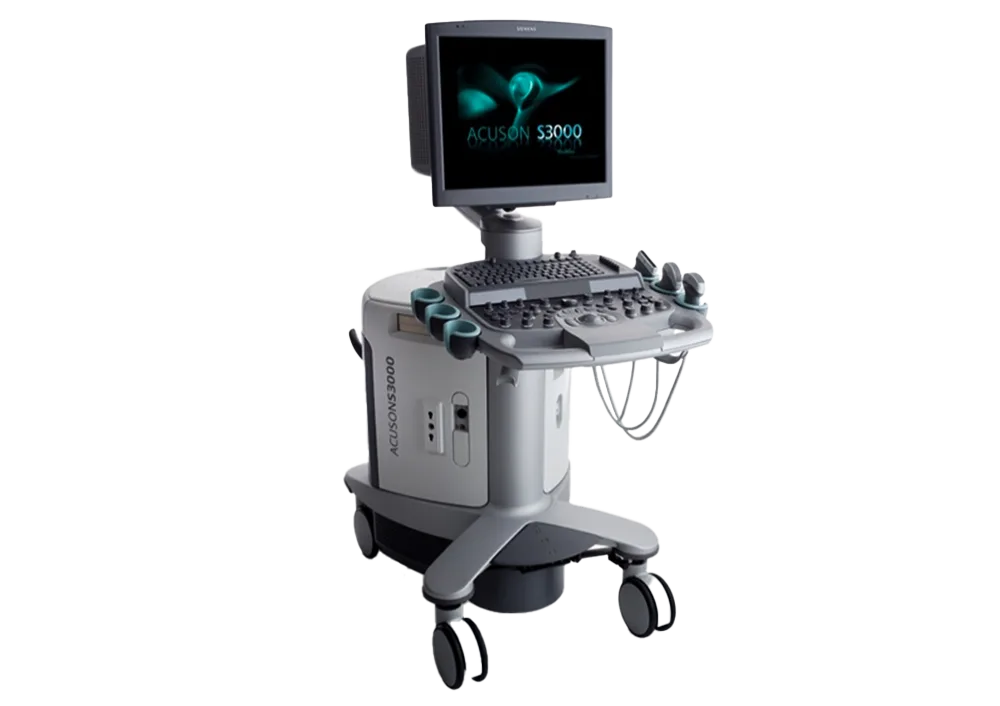
General Imaging and Screening
Ultrasonography is a safe and non-invasive diagnostic imaging modality that utilizes high-frequency sound waves to visualize internal body structures. Due to its radiation-free nature, ease of use, and broad range of clinical applications, ultrasonography is one of the most frequently utilized imaging techniques across virtually all medical specialties. It plays a vital role in both diagnosis and follow-up, ranging from prenatal monitoring to the evaluation of internal organs and soft tissues.
Technological Infrastructure and Procedure
Ultrasonography is performed using a transducer (probe) that emits high-frequency sound waves into the body. These sound waves are reflected by tissues and organs, and the returning echoes are processed to generate real-time images.
Advanced ultrasound technologies further expand its diagnostic capabilities. Color Doppler Ultrasonography enables the assessment of blood flow within arteries and veins, while 3D and 4D ultrasound systems provide detailed three-dimensional visualization of anatomical structures and fetal development.
The procedure is generally painless, non-invasive, and generally requires little to no special patient preparation. These advantages make ultrasonography one of the most widely used imaging modalities for both screening and diagnostic purposes.
Advantages
- Safe and radiation-free imaging modality.
- Provides real-time visualization of anatomical structures and physiological processes.
- Quick and easy to perform, often delivering immediate diagnostic information.
- Broad range of applications across multiple medical specialties.
- Cost-effective, patient-friendly, and highly accessible diagnostic tool.
Clinical Applications
Ultrasonography is widely used throughout modern medicine, including:
- Obstetrics and Gynecology: Pregnancy monitoring, fetal assessment, and evaluation of the uterus and ovaries.
- Cardiology: Assessment of cardiac structures and function through echocardiography.
- General Surgery and Internal Medicine: Evaluation of organs such as the liver, kidneys, pancreas, gallbladder, and thyroid gland.
- Urology: Assessment of the prostate gland, bladder, kidneys, and urinary tract.
- Musculoskeletal Imaging: Visualization of muscles, tendons, ligaments, joints, and related pathologies.
- Emergency Medicine: Rapid evaluation of trauma patients, internal bleeding, organ injuries, and other acute conditions.

Ваше здоровье
В руках доверия
Новое мобильное приложение Güven Health Group уже доступно!
Скачивайте наше приложение с легкостью! Выберите ссылку, соответствующую вашей операционной системе, и сделайте свою жизнь проще прямо сейчас.